
Our Vision
Regenerative olive growing
Agroecology
Production of exceptional olive oils

Nectar Ingénierie Oléicole is the project manager of the NECTAR programme, dedicated to creating an organic, regenerative, productive and resilient olive-growing sector in south-western France.
NECTAR'S EXPERTISE & MISSION
Olive Growing Today: A Sector Facing a Shortfall
Today in France, domestic olive oil production covers only around 4% of national consumption. Worldwide, less than 10% of olive groves are organically farmed.
The world's main olive-growing regions are bearing the full brunt of climate change and environmental crises.
Olive trees have been cultivated in Occitanie since Antiquity, but were massively replaced by vineyards during the 20th century. Today, the olive tree's tolerance to drought makes it more resilient than other crops, especially when grown using agroecological practices.
NECTAR, a Sector for the Future
At NECTAR, we are just as passionate about ecology as we are convinced that a sustainable approach must also be productive and profitable to ensure its success. That is why we have developed an agroecological olive-growing model, combining our environmental convictions with an ambitious economic vision.
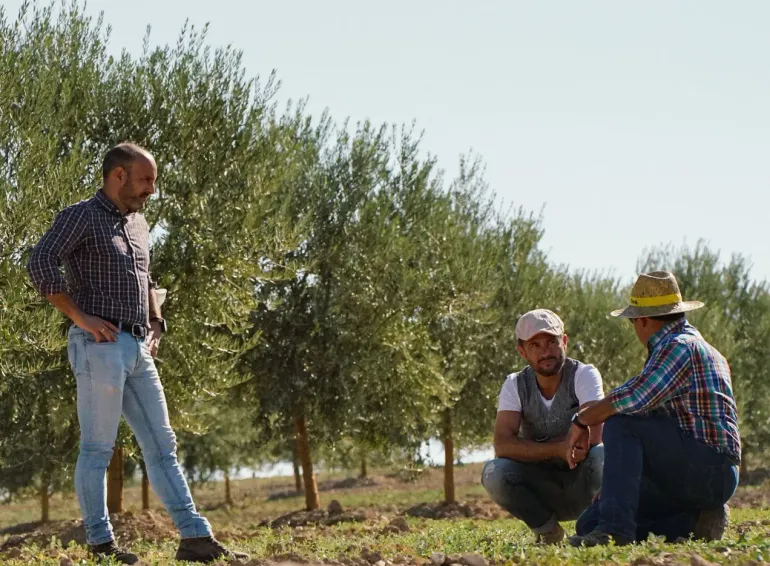
Our Areas of Expertise
NECTAR’s scope of activity includes the development of olive groves, the creation of a processing facility, research and development, training, as well as the creation of distribution channels. It is a fully integrated, regenerative value chain designed to generate significant added value.
In figures, this represents:
- > 1,000 ha of olive groves
- > €30M in agricultural and industrial investment
- > 50 jobs
- > 30,000 t of CO₂ stored
And a significant increase in biodiversity.


Our Vision of Agroecology:

Crop Diversification
NECTAR increases genetic diversity by planting four main olive varieties, along with around ten secondary varieties, distributed across the different plots.
We also foster plant biodiversity by sowing diverse cover crops, including cereals, legumes and brassicas, and by planting diverse hedgerows both between and within plots.

Organic Farming
Our production is certified under the Organic Farming label, reflecting our commitment to developing a sustainable olive-growing sector.

Soil Conservation
Soil is the foundation of life and a vital resource for agriculture, yet it is increasingly exposed to erosion. We use several practices to protect our soils: minimising soil disturbance, establishing and managing cover crops, and naturally enriching the soil.

Improving Water Cycles
Revitalised and covered with vegetation, our soils will help distribute, infiltrate and store water across the land, reducing erosion and improving water availability for crops.
NECTAR also uses a drip irrigation system to optimise water use. This is combined with deficit irrigation techniques to encourage deep root growth and fruit production.
Biodiversity Development
Within the NECTAR orchards, we integrate groves, diverse hedgerows and ponds, nesting boxes and flowering areas, connecting them to form a cohesive ecological network. These agroecological infrastructures provide food and shelter for pollinators and beneficial insects, while also supporting our soils and their mycorrhizal networks.

Economy
The ecosystem services provided by nature enable us to reduce our reliance on external inputs while developing productive and profitable farming systems.
Through agroecology, NECTAR minimises production costs and optimises the economic performance of its olive groves.

Community Engagement
NECTAR is also a societal project that brings together farmers, training and research institutes, businesses, associations and other stakeholders in its implementation. We aim to provide solutions tailored to local contexts while strengthening the autonomy and engagement of the communities involved.

Awareness and Education
NECTAR organises diverse hedgerow planting days with local authorities, businesses, schools and a wide range of other groups, helping to plant the seeds of awareness.
NECTAR also works with schools, from primary education to higher education, to raise awareness and provide training about our professions.